
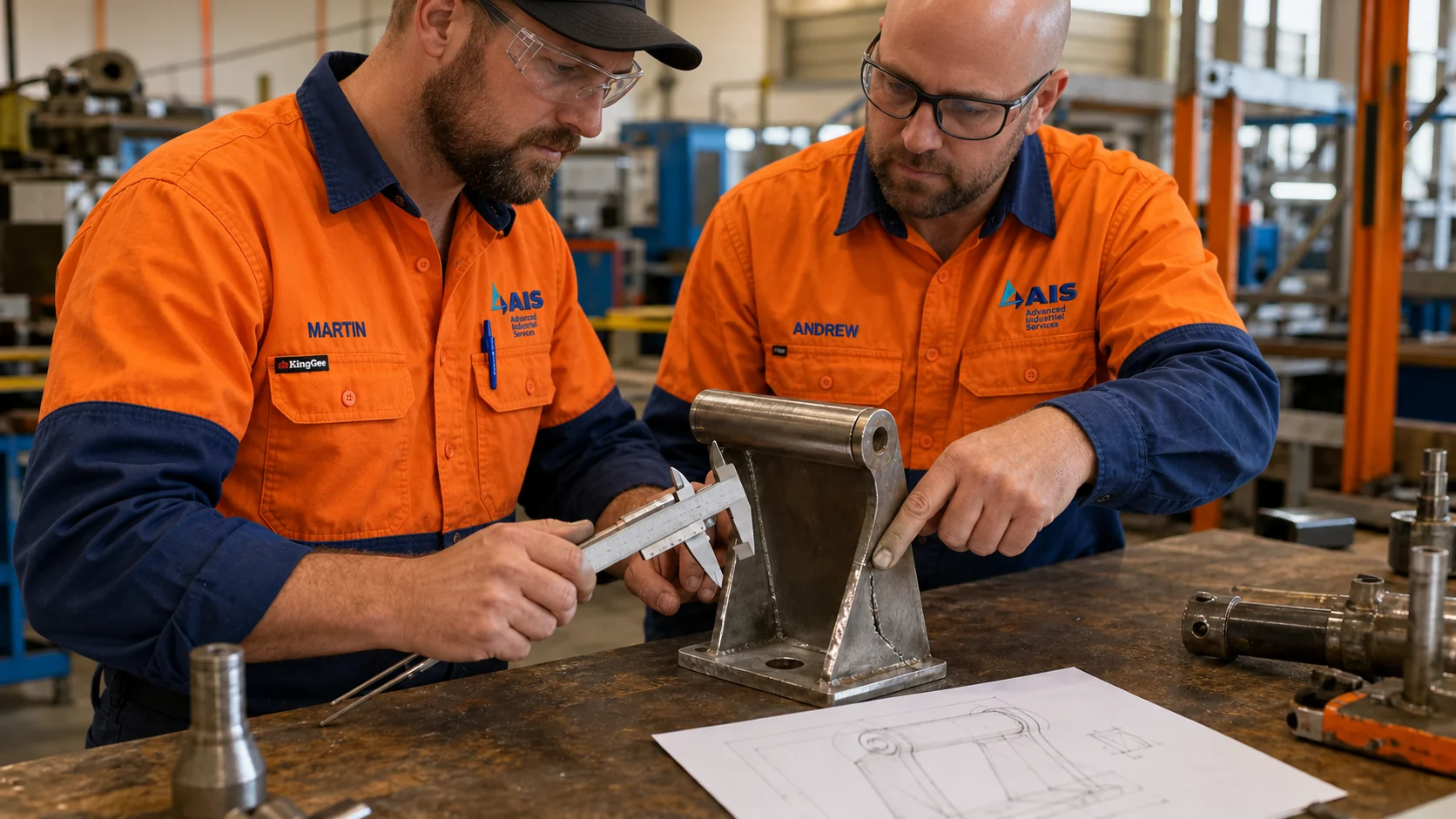
When a bracket cracks, a guard no longer fits or a conveyor component wears out, the fastest-looking option is not always the fastest route back to reliable production. The decision should account for failure mode, duty, access, lead time and how the repair affects the rest of the machine.
01 / 03
Understand why the part failed
A repair that recreates the original geometry may recreate the original failure. Check alignment, load path, vibration, product build-up, impact and previous modifications before deciding the part itself was inadequate.
Photographs, dimensions and the surrounding installation help establish whether the damaged item is the cause, a weak link or simply where another problem became visible.
02 / 03
Compare the options against plant reality
Repair can be appropriate when the material and geometry remain fit for duty and the work can be completed to an approved method. Custom fabrication can solve obsolete, poorly fitting or access-specific components. Replacement is often preferable where certification, proprietary tolerances or repeated fatigue make a local solution inappropriate.
- 01Required service life and consequence of failure
- 02Material, loading and environmental conditions
- 03OEM availability and realistic lead time
- 04Installation access and cross-trade changes
- 05Inspection or engineering requirements before return to service
03 / 03
Document the change
Record material, dimensions and any departure from the previous arrangement. If the work affects guarding, structure, electrical routing or controls, include those disciplines in the review before fabrication begins.
Structural, pressure-related, load-bearing and safety-critical work may require engineering input and site approval. The site’s risk, isolation and inspection requirements remain the governing controls.
The practical takeaway