
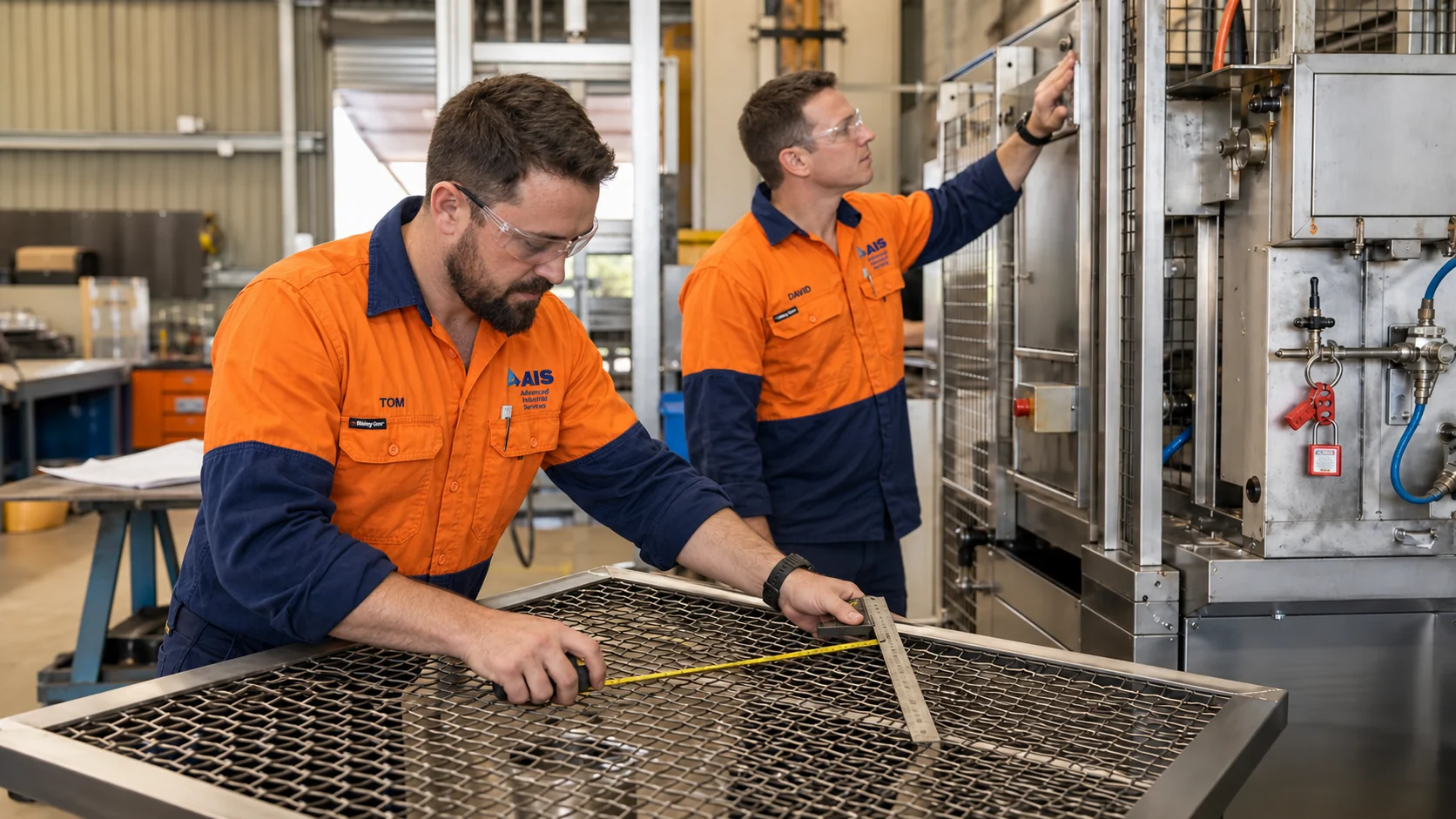
Machine guarding is part of a safeguarding system. Moving a panel, adding an access door or changing a support can affect reach distances, interlocks, visibility, cleaning and how people perform routine work. The scope needs to begin with the hazard and required protection, not with a drawing of the new guard.
01 / 03
Define the safeguarding function first
Identify the hazards, operating modes and people who may approach the area. Confirm how the existing fixed guards, movable guards, interlocks, stopping system and site procedures work together. A fabrication change must not be assessed in isolation from those controls.
Guarding and safety-system changes may require competent risk assessment, engineering and validation under applicable site and regulatory requirements.
02 / 03
Design around the work people actually perform
Consider normal operation, clearing, cleaning, inspection, lubrication, adjustment and component replacement. If a task becomes unnecessarily difficult, the design may encourage future damage or unauthorised removal.
- 01Hazard reach and opening dimensions
- 02Strength, fixings and retained rigidity
- 03Interlock type and defeat resistance
- 04Access for cleaning and maintenance
- 05Visibility, drainage and product build-up
03 / 03
Verify the complete change before handback
Inspect fabrication, fasteners, edges, clearances and the relationship to moving equipment. Test interlocks and stopping behaviour through the authorised validation process, then confirm the machine can be operated, cleaned and maintained as intended.
Update drawings, inspection tasks and training where the modification changes access or behaviour. The handback should describe the safeguarding change, not merely state that the guard was installed.
A successful guard modification protects the hazard and still supports safe, practical operation and maintenance.
The practical takeaway