Maintenance in food and packaging plants has two finish lines: the equipment must be safe and functional, and the production area must be suitable to return to the site’s hygiene and quality controls. That affects how the work is isolated, contained, fabricated, cleaned, inspected and handed back.
01 / 03
Plan for the production zone, not only the machine
Confirm the site’s hygiene zoning, allergen, foreign-material and cleaning requirements before selecting the work method. Welding, drilling, cutting, lubricating and opening enclosures can each introduce different controls depending on the location and production state.
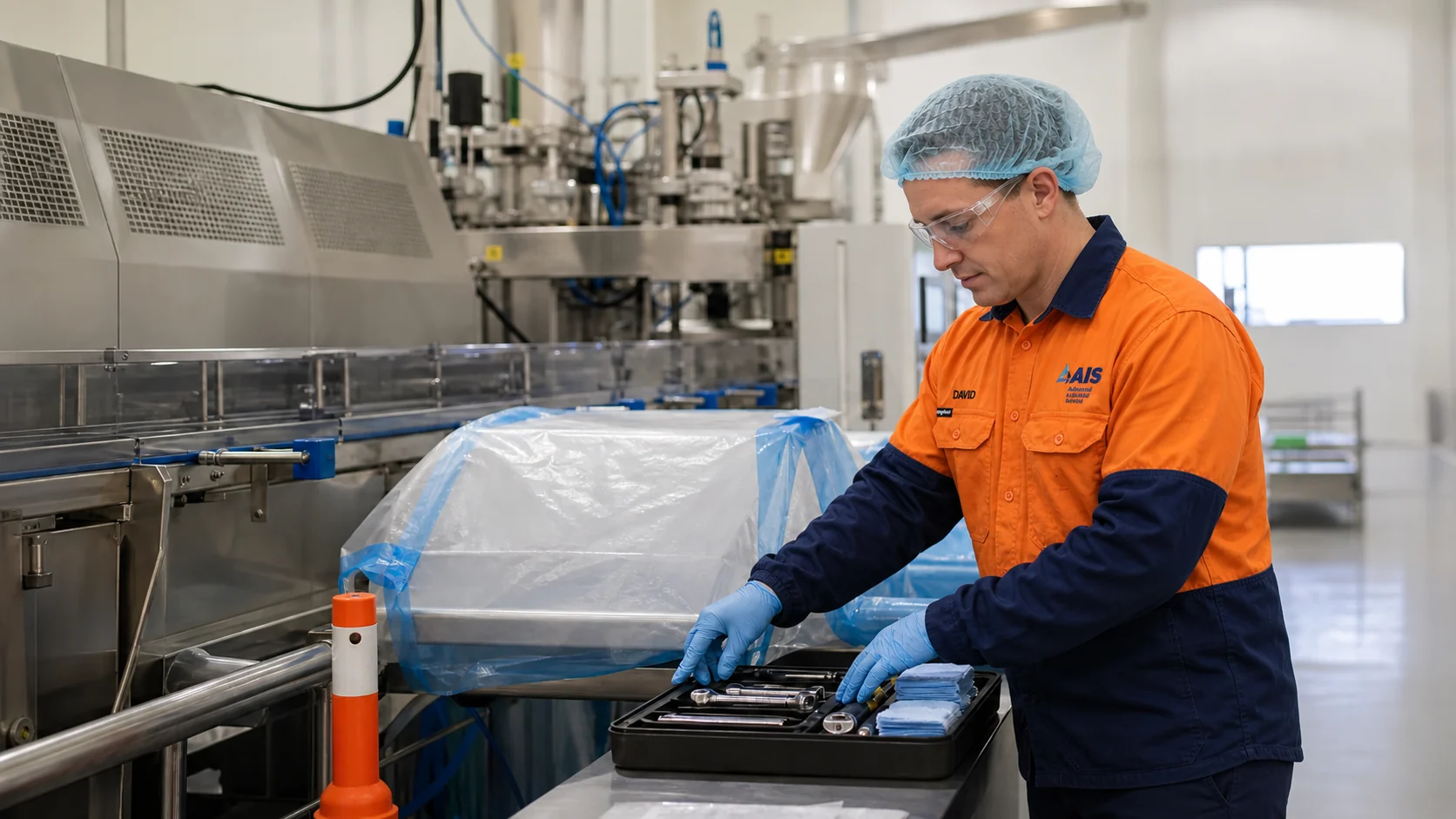
Define how tools, removed parts, swarf, consumables and temporary protection will be accounted for throughout the job.
02 / 03
Choose a solution that can be cleaned and maintained
Consider material compatibility, surface finish, drainage, crevices, exposed threads and access for inspection. A bracket or cable route that works mechanically may still create a collection point or make routine cleaning difficult.
Engage the site’s quality and hygiene representatives where the modification affects product zones or established cleaning methods.
- 01Approved material and lubricant requirements
- 02Drainage and product-retention risks
- 03Cleanability around guards, cables and supports
- 04Tool and foreign-material accountability
- 05Post-work cleaning and inspection responsibility
03 / 03
Close out the area as carefully as the repair
Complete functional checks, reinstall guards and covers, remove temporary controls and reconcile tools and materials. Record any changed cleaning, inspection or maintenance requirement created by the work.
Production release remains a site decision. The technical handback should give the responsible people clear evidence of what changed and what was checked.
In food production, a mechanically complete job is not automatically a production-ready job.
The practical takeaway