
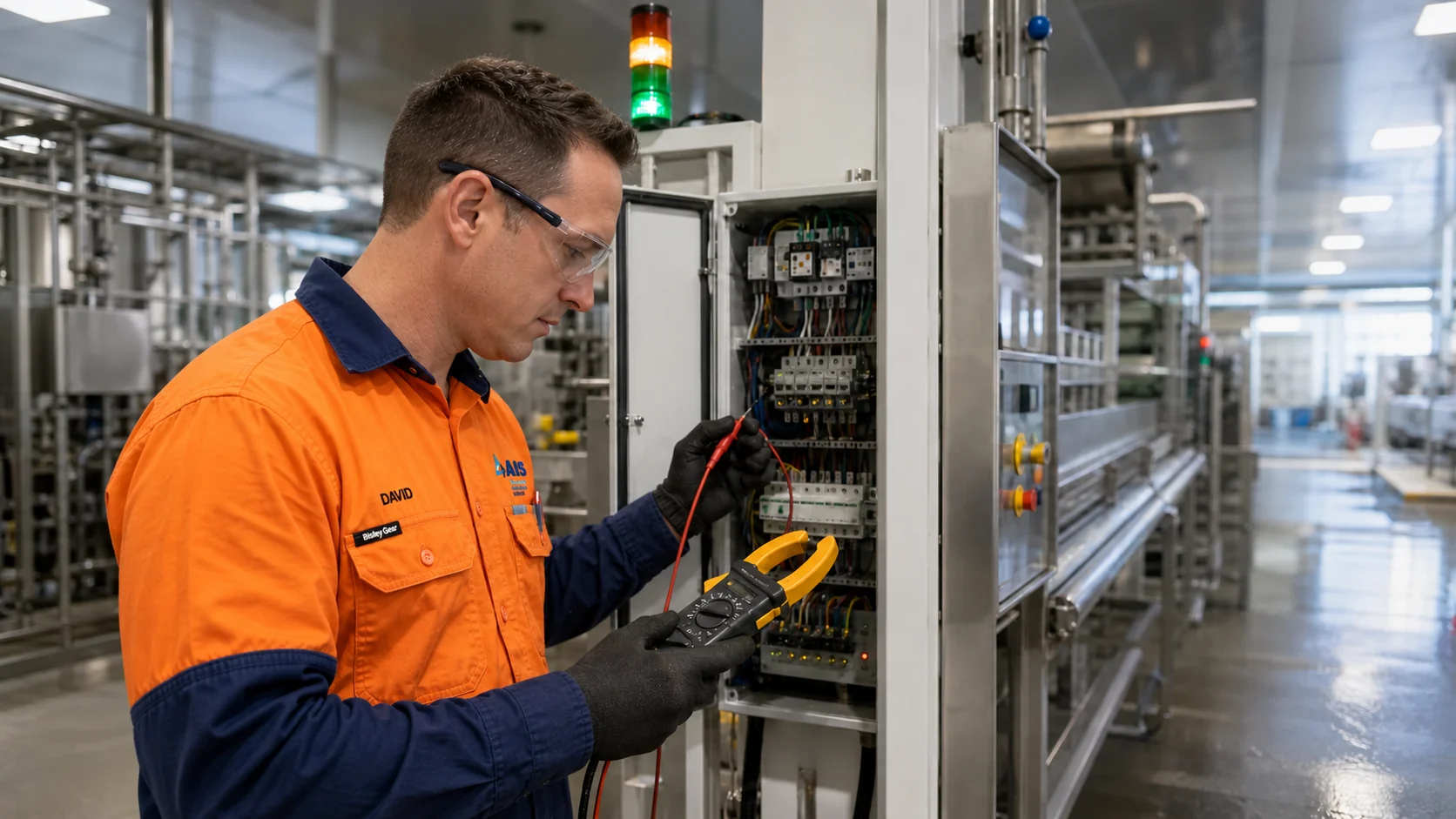
A fault that returns after a reset or component replacement is no longer an isolated event. It is evidence that the failure mechanism has not been found. The next useful step is to stop treating the last failed part as the whole problem and examine the operating conditions around it.
01 / 03
Record the pattern, not just the alarm
Capture what the plant was doing immediately before the trip: product, load, speed, recent maintenance, ambient conditions and any upstream or downstream disturbance. A timestamp without operating context rarely narrows the cause.
Compare the event with previous occurrences. Similar time-of-shift, load or changeover conditions can reveal a pattern that is invisible when each callout is handled in isolation.
- 01Operating state and load at the time
- 02Protection, drive or PLC event history
- 03Recent changes to equipment or process settings
- 04Physical signs such as heat, contamination, vibration or loose connection
02 / 03
Look beyond the electrical symptom
Electrical protection may be responding correctly to a mechanical or process problem. A motor overload can begin with a binding bearing, product build-up, incorrect alignment or a changed duty cycle. Replacing the electrical component may restore operation without removing the cause.
A cross-trade inspection is especially valuable when the electrical readings are plausible but the fault continues under the same operating condition.
The device that trips is not automatically the device that failed.
03 / 03
Close the loop after the repair
Record what was tested, what was changed and the expected result. Then verify the equipment under the condition that previously produced the fault. Without that final comparison, a repair is only a plausible theory.
Electrical testing and fault-finding must be completed by appropriately licensed and authorised people under the site’s isolation and safety procedures.
The practical takeaway