
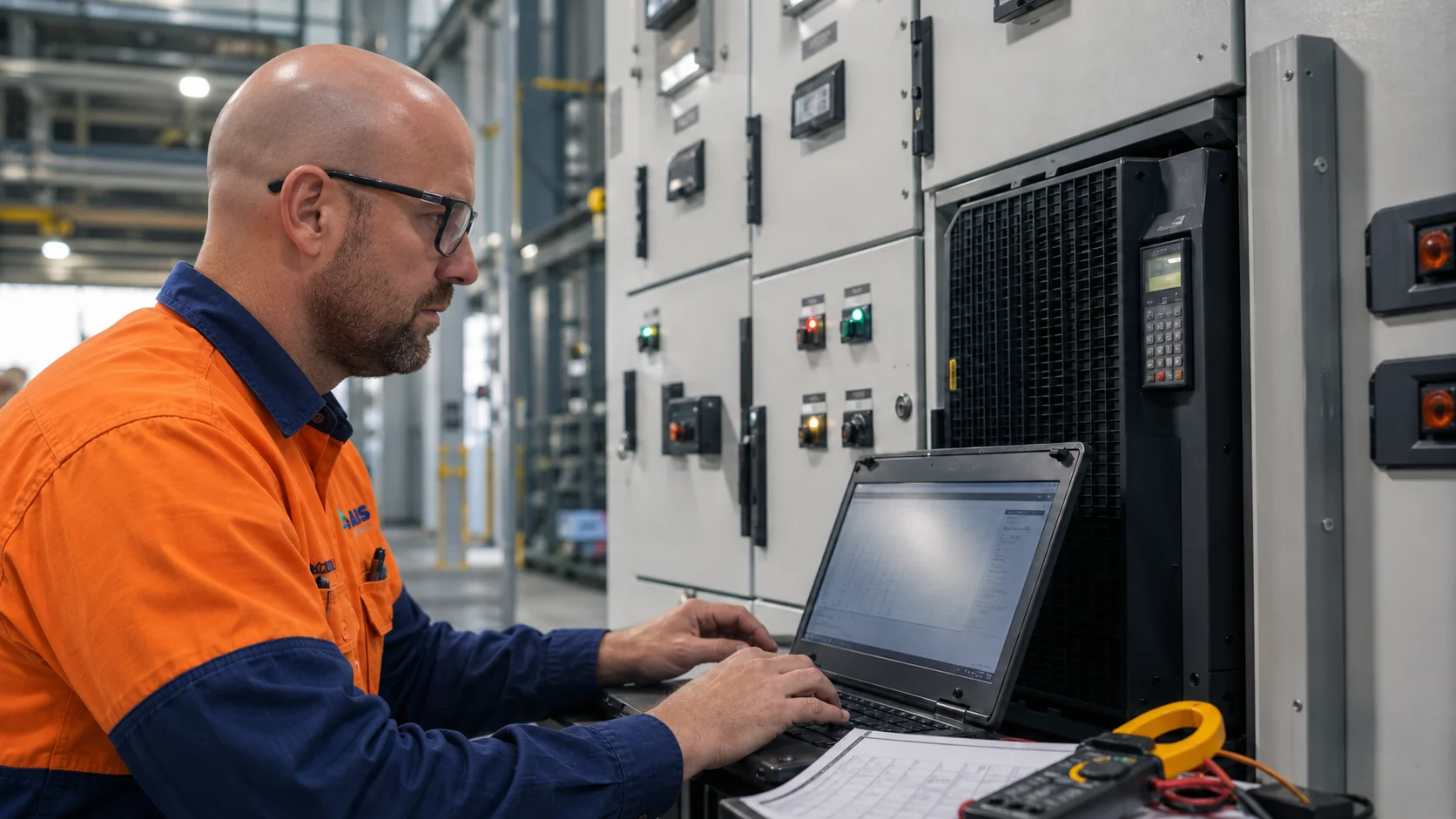
A variable speed drive can detect and report a problem without being the component that caused it. Repeatedly clearing the trip or replacing the drive may leave a mechanical load, supply disturbance, motor issue or unsuitable parameter unchanged. The diagnosis should connect the recorded event to the operating condition that produced it.
01 / 03
Capture the event before it is cleared
Record the complete fault code, timestamp, drive status, output frequency, current and relevant event history where the equipment provides it. Note whether the trip occurred during acceleration, steady running, deceleration, restart or a process disturbance.
Do not access live electrical equipment unless licensed, authorised and working under the site’s electrical safety system.
02 / 03
Separate electrical, mechanical and process causes
Check the fault information against the motor, cabling, incoming supply and driven load. An overcurrent event during acceleration suggests a different investigation from a DC-bus overvoltage during rapid deceleration or an overtemperature event after sustained high load.
- 01Supply condition and upstream events
- 02Motor and cable test history
- 03Driven-load condition and freedom of movement
- 04Acceleration, deceleration and current-limit settings
- 05Cooling, contamination and enclosure temperature
03 / 03
Verify the correction under the real duty
Compare parameters with the approved machine requirements and known-good records before changing them. Parameter changes can mask a mechanical problem or alter machine behaviour if they are made without understanding the complete system.
After authorised corrective work, test through the load, speed and transition that previously caused the trip. Record the evidence and any changed settings for the next technician.
The drive’s fault code identifies what it detected—not automatically what failed.
The practical takeaway