
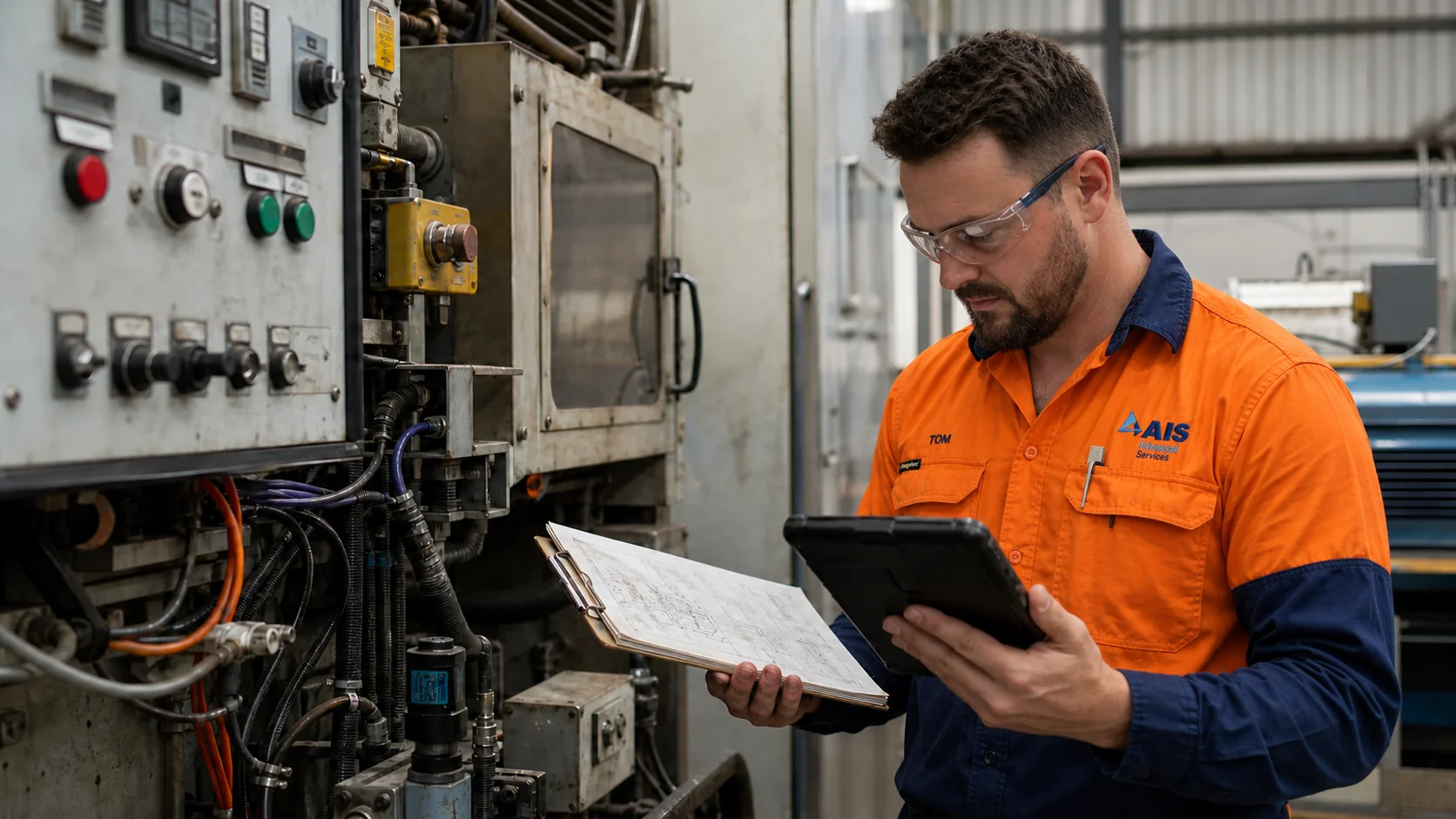
Brownfield upgrades begin with an operating machine, not a blank design. The plant has accumulated modifications, operator habits, network dependencies and mechanical limitations that may never have reached the drawings. A reliable scope makes that current state visible before new hardware and software are committed.
01 / 03
Document the plant as it operates now
Compare drawings, software backups and equipment schedules with the installed plant. Record field modifications, spare I/O, device versions, network architecture and the control functions operators actually use. Treat unexplained differences as scope items rather than assumptions.
Observe a normal start, stop, changeover and fault recovery where the site can do so safely. Those sequences often reveal dependencies that are absent from the functional description.
02 / 03
Define every interface and retained constraint
Identify what the upgrade must exchange with upstream equipment, downstream equipment, site services, safety systems, production reporting and manual operating steps. Include the mechanical condition of retained equipment; new controls cannot remove backlash, poor repeatability or inadequate guarding.
- 01Power, I/O and industrial-network boundaries
- 02Safety functions and validation responsibilities
- 03Product recipes, setpoints and historical data
- 04Mechanical and instrumentation work required
- 05Operator, maintenance and support access
03 / 03
Stage the cutover and the route back
Separate work that can be completed and tested before the shutdown from work that must occur during the production window. Define simulation, factory testing, field checks and the product conditions needed for final acceptance.
Agree the decision points for continuing, correcting or returning to the known operating state. A rollback plan is not pessimism; it is part of protecting production while the new system is proven.
A brownfield scope is complete when the retained plant, not only the new equipment, has been accounted for.
The practical takeaway